Why is Japan population decline?

Why is Japan population decline?

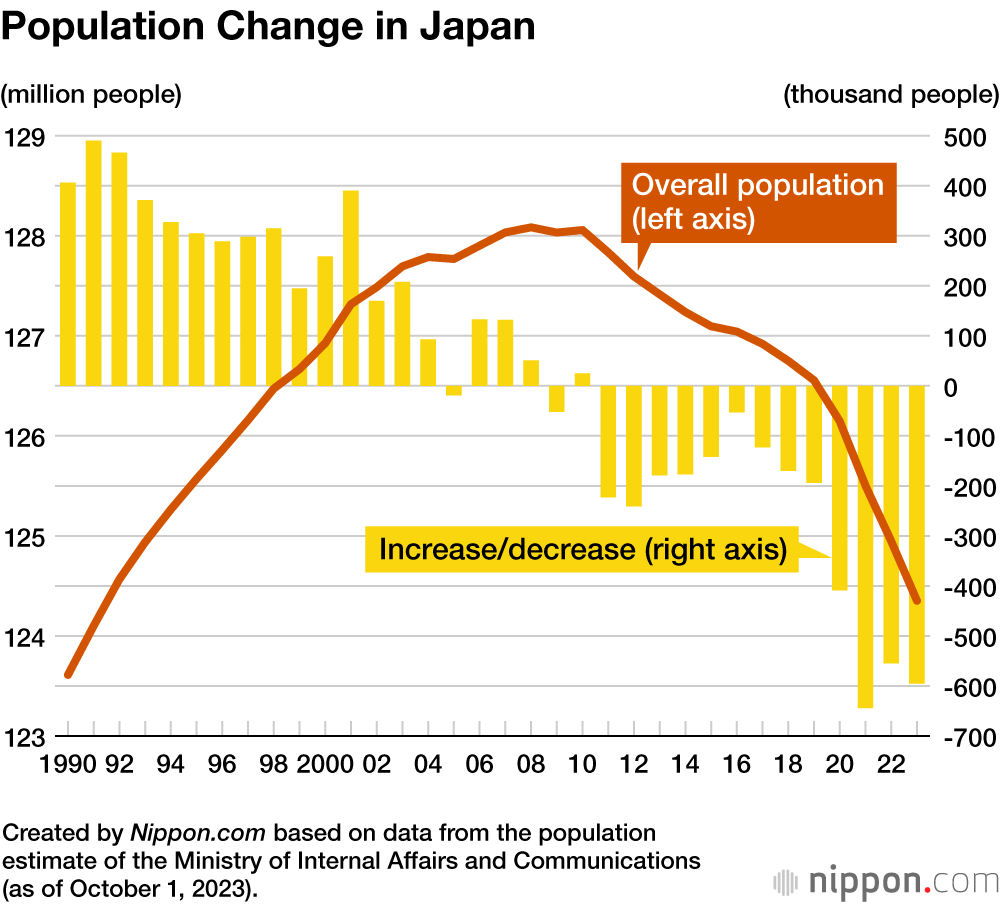
Japan's population decline is caused by a combination of factors, including an aging population, low fertility rates, and a lack of immigration. The aging population is due to increased life expectancy and low fertility rates, while the low fertility rates are due to high education and career expectations for women, a lack of family-friendly policies in the workplace, and cultural attitudes towards marriage and parenthood. Japan has historically been a relatively closed society with limited immigration policies, leading to a lack of diversity in the population and a shortage of workers in certain industries. The economic challenges presented by the aging population and low fertility rates include a shrinking labor force that makes it difficult for businesses to find workers and puts a strain on social security systems. Other contributing factors include gender inequality, high cost of living, declining marriage rates, urbanization, intense work culture, competitive education system, and limited success of government policies aimed at addressing these issues.
What adds to Japan’s beauty?

What adds to Japan’s beauty?

The article highlights the various factors that contribute to Japan's overall beauty, including its natural landscapes, unique architecture, rich culture, delicious cuisine, serene gardens, vibrant cities, impressive technology, avant-garde fashion, colorful festivals, and warm hospitality. The country's famous attractions such as Mount Fuji and cherry blossom season are mentioned along with its traditional arts like calligraphy and flower arrangement. The article also discusses Japan's advanced technology sector and innovative companies like Sony and Toyota. Finally, it emphasizes the importance of spirituality in Japanese culture reflected in the many temples and shrines across the country.
Is Tokyo a Japanese word?

Is Tokyo a Japanese word?

Tokyo is a Japanese word that originated from the Edo period when the city was known as Edo. Its official language is Japanese, and the city has a unique dialect known as Tokyo-ben. While other languages such as English and Chinese are widely used in Tokyo due to its international status, language plays an essential role in shaping Tokyo's identity and culture. The name Tokyo carries significant historical and cultural meaning for Japan, symbolizing the country's transition from feudalism to modernity and representing its status as an economic powerhouse in the region.
Why is Japan’s flag a red dot?

Why is Japan’s flag a red dot?

Japan's flag, known as the "Nisshōki," features a white background with a red dot in the center. The red dot, or "Hinomaru," symbolizes the sun and is seen as a representation of Japan itself. The sun has played a significant role in Japanese culture and mythology for centuries, with the sun goddess Amaterasu being revered as one of Japan's most important deities. While Japan's flag has been criticized for its association with Japan's imperial past, it remains an enduring symbol of the country's cultural heritage and national identity.
Is it illegal to get a tattoo under 18 in Japan?

Is it illegal to get a tattoo under 18 in Japan?

Tattoos have a long and rich history in Japan, but there is a growing debate about whether or not it is legal for minors to get tattoos. The legal age for getting a tattoo in Japan is 18, and even with parental consent, some tattoo artists may refuse to work on minors due to personal beliefs or concerns about potential legal issues. Tattoos are still largely stigmatized by society in Japan, and there are health risks associated with underage tattoos. If caught illegally tattooing a minor in Japan, tattoo artists can face fines of up to 500,000 yen or imprisonment for up to one year. While there is a growing debate over whether or not the legal age for getting a tattoo should be lowered, for now, it remains illegal for anyone under 18 to get a tattoo without their parent or legal guardian's permission.
Can a 14 year old live alone in Japan?

Can a 14 year old live alone in Japan?

This article explores whether or not a 14 year old can live alone in Japan. It discusses the legal age of majority, child welfare laws, education, financial support, healthcare options, cultural differences, social support, housing options, mental health challenges, and potential dangers of criminal activity. The article concludes by stating that while it is legally possible for a 14 year old to live alone in Japan with proper support and guidance, it is not recommended due to the potential risks and challenges.
What is mochi called in Japan?

What is mochi called in Japan?

Mochi is a traditional Japanese food made from pounded glutinous rice that has become increasingly popular worldwide. In Japan, it is simply called "mochi," which accurately describes the process of making this delicious treat. Mochi has been an important part of Japanese culture for centuries and is often consumed during special occasions and festivals such as New Year's Day. However, improperly stored mochi can lead to food poisoning, so it is important to handle and consume mochi with care. Mochi-making is not only a culinary art but also a cultural tradition that reflects the values and beliefs of the Japanese people.
What is Pika Japan?

What is Pika Japan?

Pika Japan is an online store that specializes in Japanese snacks and candy, offering a wide range of high-quality products that are not easily found in other stores. Founded in 2015 by a group of Japanese entrepreneurs who wanted to share their love for Japanese snacks with the world, Pika Japan sources its products from reputable suppliers in Japan and offers competitive prices and fast shipping worldwide. The company also offers a subscription box service and rewards program, and has plans to expand its product offerings and services in the future.
What countries support Japan?

What countries support Japan?

Japan has gained support and friendship from many countries around the world due to its economic and technological prowess, as well as its commitment to promoting global peace and security. The article explores in detail the countries that support Japan, including the United States, Australia, South Korea, China, Canada, the United Kingdom, France, Germany, India, and Singapore. These relationships provide mutual benefits for both Japan and its allies and are likely to continue strengthening in the future.
What body type is attractive in Japan?

What body type is attractive in Japan?

The ideal body type in Japan is generally considered to be slim and petite, with women expected to have a small waist, slender legs, and a modest bust size. Popular culture, traditional clothing such as kimono and yukata, cultural attitudes towards weight, genetics, and the influence of Western beauty standards all play a role in shaping Japanese beauty standards. Despite the emphasis on slimness, there are also movements promoting body positivity and self-acceptance. However, pursuing an ideal body type can have negative consequences for both physical and mental health.