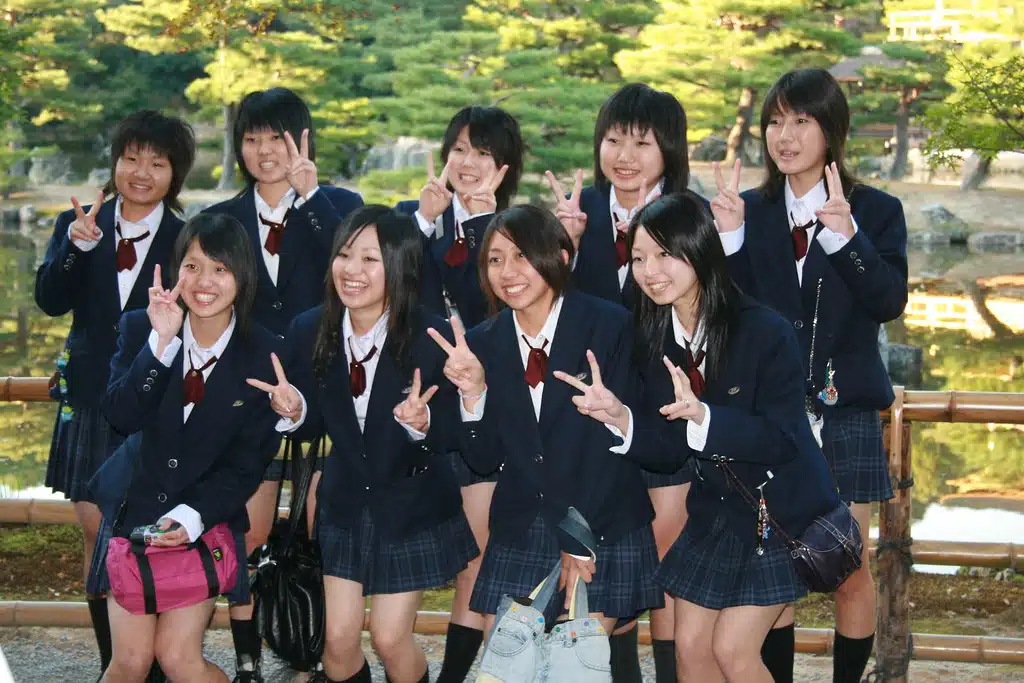
Can foreign kids go to school in Japan?

Can foreign kids go to school in Japan?

Foreign kids can attend school in Japan if they meet certain requirements, such as having valid visas and being able to speak Japanese fluently or willing to learn the language. Public schools are free but may be challenging for non-Japanese speakers, while international schools offer an English-based curriculum. Private schools are also an option but can be expensive. Parents who wish to accompany their children must have valid visas and sufficient funds. Despite the challenges, attending school in Japan offers numerous benefits, such as learning a new language and culture and receiving an excellent standard of education recognized internationally.
Why do Japanese smile so much?

Why do Japanese smile so much?

Japanese people smile a lot due to their culture and etiquette, where showing respect to others is important. Smiling is also used as a form of emotional expression, to maintain harmony in social interactions, and as part of the strong customer service culture. Non-verbal communication plays a significant role in Japan, and smiling is seen as a desirable trait in professional settings. Japanese people tend to have a positive outlook on life and share happiness with others through smiling. However, there can also be social pressure to maintain a happy demeanor at all times. Education also emphasizes the importance of showing respect and being polite through smiling from an early age.
Do Japanese students go to school 6 days a week?

Do Japanese students go to school 6 days a week?

This article provides an in-depth look at the Japanese education system, including its history, structure, length of school year and day, weekly schedule, after-school activities, homework load, controversies surrounding the system, and proposed reforms. It also addresses the common question of whether Japanese students go to school six days a week (they do not). While there are many positive aspects of the Japanese education system, such as its emphasis on extracurricular activities and community building, there are also challenges that need to be addressed through reforms and improvements.

Why aesthetics are important in Japan?

The article discusses the importance of aesthetics in Japanese culture and how it has influenced various aspects of life, including art, architecture, cuisine, fashion, tea ceremonies, gardening, technology, and popular culture. The Japanese concept of beauty is rooted in finding harmony and balance in simplicity, imperfection, and nature. The use of natural materials and attention to detail is a hallmark of Japanese aesthetics. The article concludes that the unique sense of beauty created by Japanese aesthetics has captivated people around the world for centuries.
Can a foreign child go to public school in Japan?

Can a foreign child go to public school in Japan?

Foreign children can attend public schools in Japan if they meet certain requirements. The education system in Japan follows a 6-3-3-4 system, and public schools are free for all students. To attend an elementary, junior high, or high school in Japan, foreign children must have a residence status that allows them to stay in Japan for more than a year and be able to speak Japanese at a basic, intermediate, or advanced level depending on their age. Private schools are also an option but come with a high price tag. The application process varies depending on the school district and involves submitting proof of residency, academic records from their previous school, and proof of Japanese language proficiency.

Why do Japanese say you have 3 faces?

In Japanese culture, every person is believed to have three faces: the first face that is shown to the world, the second face that is shown to close friends and family, and the third face that nobody knows but themselves. This concept reflects different levels of intimacy and trust and helps people navigate social situations while maintaining a sense of inner self. The first face represents how people want to be perceived by others, while the second face represents a more relaxed and informal side of their personality. The third face is the most private one, representing a person's innermost thoughts and feelings. Understanding this concept is essential for anyone who wants to understand Japanese culture's emphasis on social harmony and personal identity.
How many breaks do Japanese students get?

How many breaks do Japanese students get?

Japanese students have a structured school day that includes regular breaks, such as an hour-long lunch break and two shorter breaks during the day. They also have seasonal breaks twice a year during summer and winter vacations, and exam periods that can last for up to two weeks. While some critics argue that the education system needs reform to allow for more creativity and critical thinking, others believe that the current structure provides discipline and rigor necessary for academic success. Proposed reforms include reducing homework load, increasing opportunities for extracurricular activities, and introducing more creative teaching methods.

Do Japanese parents sleep with their kids?

The article explores the practice of co-sleeping in Japan, where parents sleep with their children in the same bed. It discusses the history and reasons behind this practice, as well as its benefits and controversies. The article also highlights cultural differences in co-sleeping and offers alternatives for parents who prefer not to co-sleep. It concludes by discussing the impact of co-sleeping on family dynamics and its cultural significance in Japan, while acknowledging that attitudes towards it may change in the future.
Do people co-sleep in Japan?

Do people co-sleep in Japan?

Co-sleeping, the practice of sleeping in the same bed or room with others, has been a long-standing tradition in Japan. However, its popularity has declined in recent years due to changing lifestyles and Western influence. While there are risks associated with co-sleeping, such as an increased risk of SIDS, it can also have benefits for infant development and parent-child bonding. Ultimately, the decision to co-sleep should be based on individual circumstances and cultural beliefs.
Why is Japan so strict about time?

Why is Japan so strict about time?

Japan's strict adherence to punctuality is deeply ingrained in its culture and can be traced back to the samurai class during the Edo period. Today, being on time is viewed as a way of maximizing efficiency and productivity, showing respect for others, conforming to societal norms, and fostering positive relationships. The Japanese transportation system and educational system also place a strong emphasis on punctuality, with penalties for tardiness in some companies. Punctuality has become an integral part of Japanese identity and a source of national pride.