Why Is Japan’s economy failing?

Why Is Japan’s economy failing?

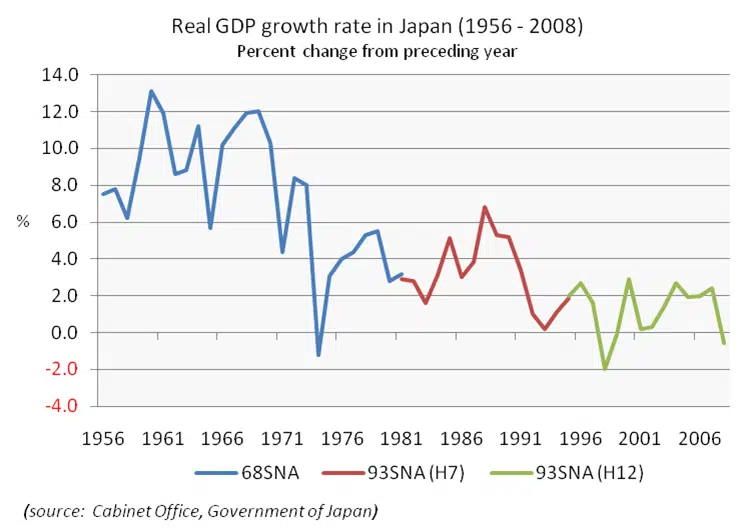
This article explores the factors contributing to Japan's economic stagnation, such as deflation, an aging population, the rise of China, high public debt, and structural rigidities. It discusses potential policy responses to help turn around the Japanese economy such as increasing domestic consumption through tax cuts, reducing public debt, reforming labor regulations, encouraging entrepreneurship, increasing foreign investment and reforming corporate governance structures. With concerted efforts from both private and public sectors, it is hoped that Japan will return back onto path towards sustained prosperity and higher living standards.
Why does Japan want a weak currency?

Why does Japan want a weak currency?

This article explores why Japan wants a weak currency, how it affects their economy, and what other factors might be involved. A weaker yen makes Japanese exports more competitively priced compared to other countries’ exports around the world, leading to increased demand for those products overseas and higher profits for Japanese companies. The Bank of Japan (BOJ) can influence exchange rates by buying or selling foreign currencies on international markets with yen or by setting interest rates at different levels than those set by other central banks. There are both benefits and drawbacks associated with a weak yen, such as increased export competitiveness and higher profits from overseas investments versus higher inflation due to increased import prices or lower returns from overseas investments when converted back into domestic money. Other factors that affect exchange rates include political stability/instability, economic policies, supply/demand dynamics, global economic conditions, etc.
Is Japan a rich country?

Is Japan a rich country?

This article provides an overview of Japan's economy, examining its GDP per capita, wealth distribution, public debt and deficit, economic strength and weaknesses. Japan has a highly developed and diversified economy with a GDP of $5.15 trillion as of 2020 and a low unemployment rate (3%). Its GDP per capita is estimated to be $38,851 in 2019 according to World Bank data which puts it among the top countries in terms of wealth per person. Although there are some disparities between different regions and income groups within Japan, overall wealth distribution is relatively equal compared to other countries around the world. Additionally, despite having one of the highest public debts in the world at over 200% of its GDP, Japan has managed to remain economically stable through careful fiscal management. In conclusion, while there are some issues related primarily due to an aging population that could put pressure on government finances going forward; overall Japan remains one of the wealthiest countries in terms world when looking at GDP per capita.
Does Japan owe money to other countries?

Does Japan owe money to other countries?

This article explores the question of whether or not Japan owes money to other countries, examining the country's large public debt and foreign debt estimated to be around $1 trillion USD. It discusses various ways in which Japan is managing this debt, such as issuing bonds and using international reserves, as well as potential methods for reducing it such as increasing exports. The impact of Japan's foreign debt on the global economy is discussed, with potential positive and negative effects depending on how it is managed.
What will happen in the future for Japan?

What will happen in the future for Japan?

This article explores potential changes that Japan may face in the coming years, such as economic growth, political landscape shifts, technological advancements, environmental issues, social changes, and cultural shifts. It looks at the current outlook of the Japanese economy and foreign investment opportunities. Additionally, it discusses potential changes to Japan's political system and calls for greater gender equality. Technological advancement is expected to remain strong with new developments such as 5G networks and renewable energy sources becoming more commonplace. Environmental issues are becoming increasingly important and social changes due to globalization will continue into the future. Lastly, cultural shifts may be difficult but could lead to greater acceptance between different cultures both inside and outside of Japan.
What will happen to Japan in 2050?

What will happen to Japan in 2050?

This article explores the potential changes that Japan may experience by 2050, such as a decrease in population due to aging and low birth rates, technological advancements like robots becoming commonplace, an increase in remote working opportunities, and climate change impacts such as rising sea levels and droughts. It also looks at the potential political changes that could occur after current Prime Minister Shinzo Abe's term ends in 2030. These changes could include calls for greater transparency when it comes to legislation passing through parliament.
What is the future for Japanese economy?

What is the future for Japanese economy?

This article provides an overview of the Japanese economy and how it has been impacted by the coronavirus pandemic. It looks at government initiatives to stimulate economic growth, trade policy and its impact on the economy, technology and innovation in Japan's economy, the role of the Yen in Japan's economy and predictions for its future economic prospects. Despite current challenges posed by Covid-19 pandemic, there are still bright spots ahead for Japan's economy as long as current trends continue into 2021 and beyond. Government initiatives will help support small businesses throughout different regions across Japan resulting in increased economic activity overall along with investments into research & development projects spurring innovation along the way.
Can Japan survive global warming?

Can Japan survive global warming?

This article explores the effects of global warming on Japan, including rising sea levels, melting glaciers, increased frequency and intensity of extreme weather events, decreased agricultural productivity due to drought or flooding, and public health impacts from air pollution. It examines how the Japanese government has taken steps towards reducing emissions and preparing for a future with higher temperatures and changing weather patterns. Additionally, it looks at the impact of global warming on Japanese agriculture, economy, and environment. To combat these issues, the government has implemented initiatives such as subsidies for water conservation technology and coastal protection projects.
Why Japanese are living in future?

Why Japanese are living in future?

Japan is a nation often seen as living in the future due to its advanced technologies, innovative culture, and overall quality of life. This article explores why Japanese are living in the future and how they have been able to do so through their economic strength, technological innovations, education system, infrastructure projects, quality of life and safety, and the impact of the internet on its society. Japan has one of the strongest economies in the world which has allowed them to invest heavily in research and development leading to technological innovations that give it an edge over other nations. The education system is highly advanced and focused on preparing students for a career in technology or engineering fields while also providing access to high-quality healthcare services as well as excellent public transportation options throughout major cities. Furthermore, Japanese culture has had a significant influence around the world due its unique combination of traditional values with modern advancements & innovations.
Is obesity normal in Japan?

Is obesity normal in Japan?

This article explores the prevalence of obesity in Japan, its causes, and potential solutions to reduce obesity rates in the country. It is estimated that 22.9% of Japanese adults aged 20 and above are classified as obese, a rate which has been steadily increasing over the last two decades. Causes of obesity include changes in lifestyle due to urbanization and industrialization, an increase in processed food consumption, and a lack of physical activity among Japanese citizens. In response to this growing problem, the government has implemented several initiatives aimed at reducing obesity rates amongst its citizens including providing financial incentives for healthy eating habits and regulating television advertisements promoting unhealthy food choices. To truly reduce prevalence of obesity amongst population, education media campaigns need utilized to raise awareness about healthy eating habits and promote nutritious recipes using locally sourced ingredients available throughout country.