Where does Japan get its oil?

Where does Japan get its oil?

Japan heavily relies on oil imports from countries such as Saudi Arabia, the United Arab Emirates, Qatar, Russia, and Kuwait. These countries account for over 70% of Japan's total crude oil imports. Japan has a significant number of refineries that process crude oil into various petroleum products. One of the major challenges faced by Japan in sourcing oil is its heavy reliance on a few countries such as Saudi Arabia and the United Arab Emirates. The country aims to achieve a renewable energy mix of up to 24% by 2030 to reduce its dependence on fossil fuels.
Why does Japan have no inflation?

Why does Japan have no inflation?

Japan has managed to maintain a stable price level for years, unlike other developed nations that struggle with inflation. The country's low inflation rate can be attributed to a combination of factors such as aggressive monetary policy by the Bank of Japan, an aging population with reduced consumer spending habits, high productivity levels that lead to lower costs of production, policies promoting globalization and renewable energy sources, cultural attitudes towards saving money over spending it impulsively, low wage growth due to increased competition and automation levels among firms across different sectors of society as well as reduced bargaining power among workers in certain industries like manufacturing or retail sectors where automation is prevalent along with various fiscal policies implemented by government authorities such as cash handouts or tax incentives aimed at stimulating demand in certain areas while keeping prices under control elsewhere.
Why is Japan’s economy so strong?

Why is Japan’s economy so strong?

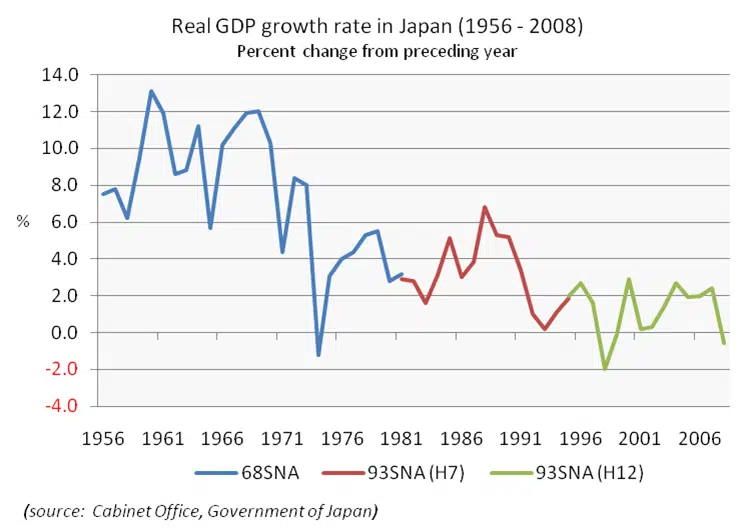
Japan's economic success can be attributed to a range of factors, including political stability, a strong export industry, high savings rates, a strong work ethic, investment in education and innovation, infrastructure investment, low crime rates, a strong social safety net, and cultural values that support business success. These factors have enabled Japan to become one of the fastest-growing economies in the world since World War II and maintain its economic strength well into the future.
What is the future city of Japan?

What is the future city of Japan?

This article explores the concept of a future city in Japan, including its design, technology, sustainability, transportation, housing, culture, and economy. It also discusses the challenges that must be overcome to make this vision a reality and highlights current projects that are paving the way for a more innovative and sustainable future. While ambitious, Japan's history of innovation and resilience suggests it has what it takes to build a remarkable future city.
What is Japan most known for?

What is Japan most known for?

This article provides an overview of Japan's rich history, culture, gastronomy, technology, arts and literature, sports, pop culture, nature, fashion, economy, education, and tourism. It highlights the country's unique traditions such as tea ceremonies and festivals like the Cherry Blossom Festival. It also explores Japanese cuisine with dishes like sushi and ramen gaining worldwide popularity. The article discusses Japan's contributions to cutting-edge technology in fields such as robotics and electronics. It also touches upon Japan's artistic heritage with traditional forms like Kabuki theater and contemporary art museums. The country's natural beauty is showcased through its diverse landscape that includes mountains, beaches, forests, and hot springs. Additionally, Japan's economy is one of the largest in the world with a highly developed infrastructure and skilled workforce contributing to its success. Finally, the article notes that Japan has become an increasingly popular tourist destination due to its unique culture and attractions such as Tokyo Disneyland and Kyoto's temples.
Why is Japan’s workforce decreasing?

Why is Japan’s workforce decreasing?

Japan's decreasing workforce is a result of demographic shifts, long working hours, low birth rates, gender inequality, restrictive immigration policies, technological advancements, changing attitudes towards work, rural-urban migration and economic stagnation. Japan needs to adopt comprehensive solutions such as promoting immigration policies, providing flexible work arrangements and addressing economic stagnation to attract more people into the labor market. The government must also address demographic shifts by adopting measures that encourage women to enter and remain in the workforce.
What do people love about Japan?

What do people love about Japan?

This article explores the reasons why people love Japan, including its unique cuisine, rich culture, advanced technology, bold fashion, natural beauty, popular entertainment, fascinating history, warm hospitality, cleanliness and hygiene standards, diverse festivals, and convenient services. The country offers something for everyone and has a welcoming atmosphere that captures the hearts of many.
How does Japan survive with so much debt?

How does Japan survive with so much debt?

Japan has a national debt that exceeds 200% of its GDP, but it has managed to maintain stability and prosperity through a combination of factors. These include government bonds, export industries, low interest rates, fiscal stimulus measures, a large domestic market, an aging population, social cohesion, technological innovation, a strong financial sector, openness to foreign investment, political stability, and flexibility. Japan's reliance on government bonds and strong export industries help keep interest rates low and generate revenue. The country's aging population creates demand for goods and services catering to older consumers. Japan's stable political system promotes continuity in economic policy-making.
What are some fun facts about Japan?

What are some fun facts about Japan?

This article provides a brief overview of various aspects of Japanese culture, including geography, food, fashion, technology, arts and entertainment, sports, language, customs and traditions, festivals, nature, and transportation. It highlights Japan's rich cultural heritage and modern innovations that make it an intriguing place to learn about and visit.
What countries does Japan owe money to?

What countries does Japan owe money to?

Japan owes money to several countries around the world, including the United States, China, and the International Monetary Fund. Some creditors have a more significant stake than others, with the US holding around 20% of Japan's total debt and China holding about 18%. While Japan's reliance on Chinese investment has raised concerns over its economic stability, its debt burden has also been exacerbated by borrowing from international organizations such as the IMF. As such, it will be essential for Japan to balance its economic relationships carefully while addressing its domestic financial challenges.