Are tsunamis frequent in Japan?

Are tsunamis frequent in Japan?

Japan is highly prone to tsunamis due to its location on the Pacific Ring of Fire, an area where many tectonic plates meet and interact. On average, Japan experiences one or two tsunamis per year, with some years seeing more and others seeing none at all. The country has developed a sophisticated warning system to alert citizens and implemented various prevention measures such as constructing seawalls along vulnerable coastlines and developing evacuation plans for coastal communities. While ongoing efforts should help mitigate the impact of future tsunamis, it is essential that coastal communities worldwide remain vigilant and prepared for this natural hazard.
When did the last tsunami hit Japan?

When did the last tsunami hit Japan?

The last major tsunami to hit Japan occurred in 2011 as a result of a magnitude 9.0 earthquake that triggered massive waves, causing widespread destruction and killing thousands of people. The tsunami also caused a nuclear disaster at the Fukushima Daiichi Nuclear Power Plant, which forced the evacuation of over 100,000 people. Japan has since launched a massive recovery effort and made significant progress in recovering from the disaster, although there are still areas that are struggling to fully recover. Japan has a sophisticated warning system in place to alert people of potential tsunamis and is investing in disaster preparedness and response measures to reduce the impact of future disasters.
How likely is a tsunami in Japan?

How likely is a tsunami in Japan?

Japan is highly vulnerable to tsunamis due to its location in the Pacific Ring of Fire and its history of devastating tsunamis. The likelihood of another tsunami hitting Japan is high, with a 20-30% chance of a magnitude 8 or higher earthquake occurring in the Nankai Trough within the next 30 years. While natural factors like earthquakes are the primary cause of tsunamis, human activity can also increase the risk of these disasters. Japan has one of the most advanced early warning systems for tsunamis in the world and has implemented numerous measures to prepare for these disasters, including evacuation drills, emergency shelters, and tsunami-resistant buildings. Public awareness campaigns are regularly conducted to educate residents about tsunami risks and how to stay safe.
Which month is typhoon season in Japan?

Which month is typhoon season in Japan?

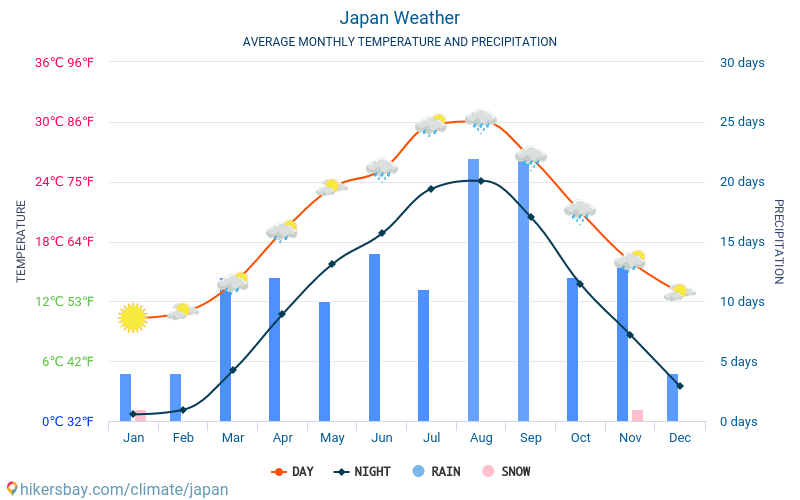
This article discusses typhoons in Japan, including what they are, where they form, when the typhoon season occurs, the impact of typhoons on Japan, and how to prepare for typhoon season. Typhoons are tropical cyclones that form near the Philippines or in the South China Sea and can bring heavy rains and strong winds to Japan's main islands. The official start of typhoon season is June 1st each year and runs until November 30th each year with peak activity during August and September. Preparations should include staying informed about current weather conditions and having an emergency plan ready in case of power outages.
Is there a typhoon season in Japan?

Is there a typhoon season in Japan?

This article discusses typhoon season in Japan, which occurs between June and October with peak season occurring between August and September. It looks at the factors that can affect the intensity of typhoons in Japan, such as ocean temperatures, atmospheric pressure systems, and wind patterns. It also examines the economic and human effects of typhoons on Japan, as well as how people have prepared for them over time. Finally, it provides examples of severe typhoons in Japan's history to illustrate their potential destructive power.