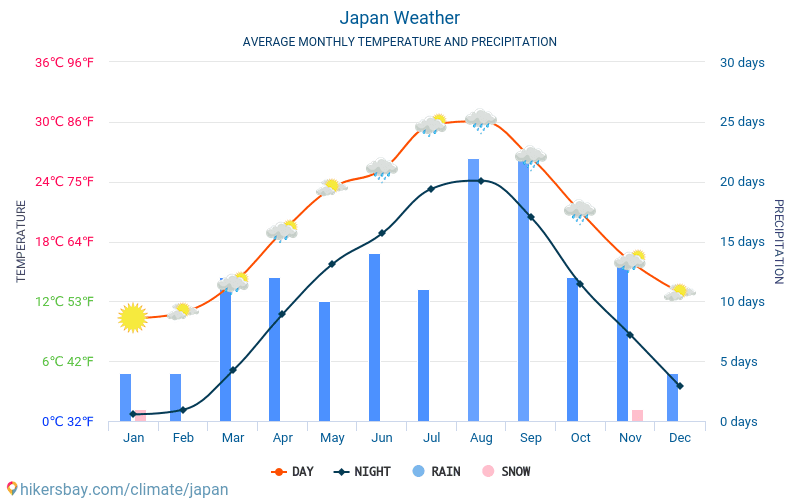
Is it always hot in Japan?

Is it always hot in Japan?

Japan experiences four distinct seasons, each with its own unique weather patterns. While summer can be hot and humid, other seasons offer milder temperatures and beautiful landscapes. Japan has a diverse climate due to its geography, with several climate zones throughout the country. Typhoons are a common occurrence during the summer months and can affect the overall climate of Japan. Understanding the climate of Japan is important for anyone planning a trip to the country or seeking to gain a better understanding of its culture and people.
Why does Japan get so hot?

Why does Japan get so hot?

The climate of Japan is influenced by its location in a temperate zone and its proximity to the Pacific Ocean, which brings warm, moist air masses that increase humidity levels. Typhoons also contribute to the hot weather, but can regulate temperature by bringing cooler air masses. The urban heat island effect exacerbates high temperatures in cities like Tokyo. Global warming is making Japan hotter, leading to more frequent and intense heatwaves. Air conditioning usage is high but can contribute to global warming. Traditional Japanese architecture takes advantage of natural ventilation and shading to stay cool in the summer. Staying hydrated is crucial during hot weather, and agriculture can be impacted by high temperatures and humidity levels. While the hot weather may deter some tourists, attractions like beaches and outdoor activities remain popular. Disaster preparedness measures are important due to Japan's susceptibility to natural disasters. As global warming worsens, it's essential for individuals, businesses, and governments to take action to reduce greenhouse gas emissions and adapt to the changing climate.