Why did Japan’s economy fail?

Why did Japan’s economy fail?

Japan's economic decline can be attributed to various factors including the bubble economy of the 1980s, an aging population leading to a shortage of skilled workers and a decrease in productivity, deflation, Japan's corporate culture, government interventionist policies, the strength of yen making exports expensive, lack of innovation, environmental issues, and cultural factors such as collectivist culture. The country needs to embrace innovation, invest in education and training programs while addressing demographic challenges to turn things around.
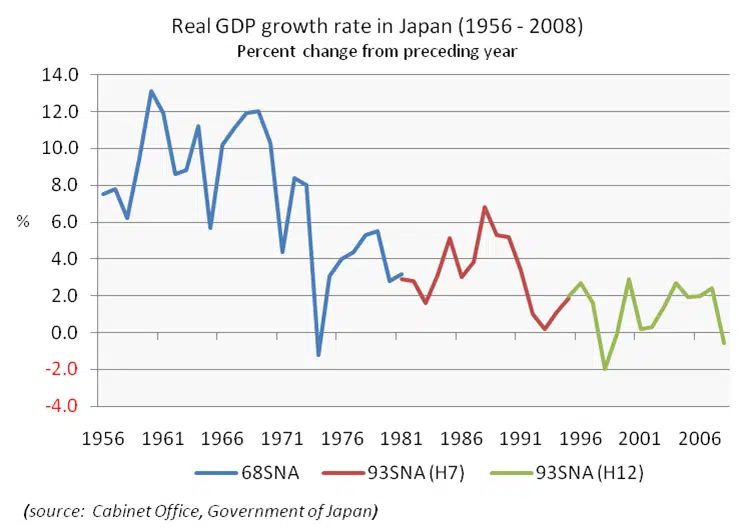
Why did Japan’s economy stop growing?

Why did Japan’s economy stop growing?

This article examines the causes of Japan's economic slowdown since the 1990s, including over-investment in real estate and stocks, appreciation of the yen, government policies, emergence of new rivals, population aging, lack of structural reforms and the impacts of global financial crisis and 2011 earthquake and tsunami. Government policies to stimulate economic activity have been implemented such as monetary easing programs, fiscal stimulus packages and structural reforms. It remains unclear whether these measures will be successful but they provide some hope for future growth within Japan’s economy.