Why did Japan get so rich?

Why did Japan get so rich?

Japan's economic success can be attributed to several factors, including its location as a strategic trade hub, government policies such as subsidies for new technologies and investment in infrastructure, a highly educated workforce that values discipline and hard work, a corporate culture focused on productivity and efficiency, technological advancements in electronics and automobiles, trade agreements with other countries, low crime rates, social harmony, demographic shifts that have created opportunities for industries such as robotics and healthcare technology, and growing interest in Japanese culture around the world. These factors have allowed Japan to become one of the most prosperous nations in the world despite challenges such as an aging population.
Why did Japan’s economy fail?

Why did Japan’s economy fail?

Japan's economic decline can be attributed to various factors including the bubble economy of the 1980s, an aging population leading to a shortage of skilled workers and a decrease in productivity, deflation, Japan's corporate culture, government interventionist policies, the strength of yen making exports expensive, lack of innovation, environmental issues, and cultural factors such as collectivist culture. The country needs to embrace innovation, invest in education and training programs while addressing demographic challenges to turn things around.
Was Japan a poor country before?

Was Japan a poor country before?

Japan was once considered a poor country, but it has since become the world's third-largest economy. Its geographical location allowed it to develop a unique culture and gain control over its resources, which helped with economic growth. The Meiji Restoration marked a turning point in Japan's economic history, with policies implemented to encourage industrialization and modernization. Rapid industrialization in the late 19th century was a significant factor in Japan's economic growth, as was the post-war economic miracle that saw its GDP skyrocket. However, Japan faces challenges such as an aging population, high national debt, and competition from other countries.
Why Is Japan’s economy failing?

Why Is Japan’s economy failing?

This article explores the factors contributing to Japan's economic stagnation, such as deflation, an aging population, the rise of China, high public debt, and structural rigidities. It discusses potential policy responses to help turn around the Japanese economy such as increasing domestic consumption through tax cuts, reducing public debt, reforming labor regulations, encouraging entrepreneurship, increasing foreign investment and reforming corporate governance structures. With concerted efforts from both private and public sectors, it is hoped that Japan will return back onto path towards sustained prosperity and higher living standards.
Why did Japan have a Lost Decade?

Why did Japan have a Lost Decade?

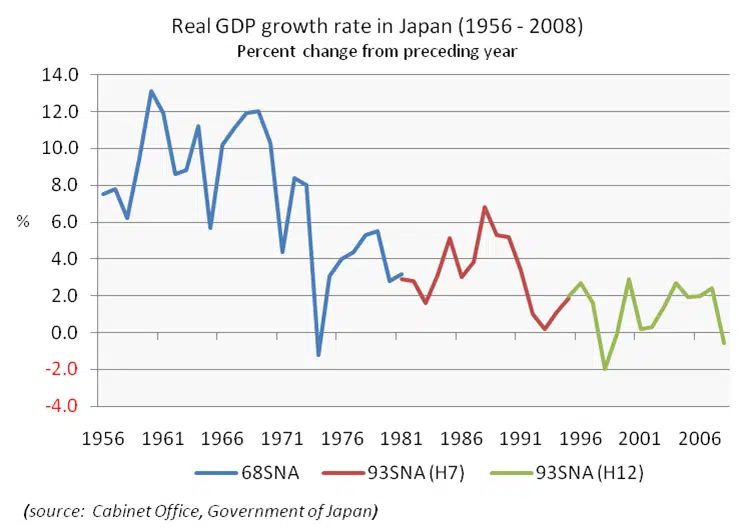
The Lost Decade is a term used to refer to the period of economic stagnation in Japan between 1991 and 2001, which was caused by an asset price bubble that burst in 1991, expansive monetary policy by the Bank of Japan, low inflationary expectations among consumers and businesses, stagnant wages, high public debt levels and lacklustre structural reforms. Since 2001, various initiatives have been taken to stimulate economic activity such as fiscal stimulus packages, monetary easing and structural reform measures. However, it remains unclear whether or not these efforts will be enough for Japan's economy to fully recover from its lost decade.
Why is Japan economy so weak?

Why is Japan economy so weak?

This article explores the reasons behind Japan's weak economic performance over the past decade, including the impact of the global financial crisis, an aging population, slow structural reforms, and low productivity growth. It also discusses potential solutions to strengthen the Japanese economy such as implementing structural reforms to boost productivity, encouraging businesses to invest in new technologies, and adjusting currency exchange rate policies. According to Charles R Tokoyama CEO Of Japan Insiders, these measures could help create jobs, stimulate private consumption and lead to a stronger and healthier Japanese economy.
What led to the decline of Japan?

What led to the decline of Japan?

This article examines the various factors that have led to Japan's decline over the past few decades, such as economic stagnation, political instability, social issues, the global financial crisis of 2008-2009 and its aging population. It also explains how these factors have contributed to Japan's debt problem and its inability to revive its economy. The article concludes by stressing the need for all stakeholders to work together if they hope for any meaningful progress going forward.
Why is Japanese economy weak?

Why is Japanese economy weak?

This article explores the reasons behind Japan's weak economy over the past two decades, including demographic issues, external factors such as the global financial crisis, lack of structural reforms, a strong yen, and the Bank of Japan's monetary policy. It is argued that in order to revive its economy, Japan must implement measures designed to increase domestic consumption and investment while reforming its labor market and taxation system. This will create a more favorable environment for businesses and foreign investors alike.
What caused Japan’s lost decade?

What caused Japan’s lost decade?

Japan experienced an unprecedented economic boom in the 1980s known as "The Miracle on the River", however this led to an asset price bubble and overinvestment which caused a stock market crash and real estate bubble burst in 1989. This, combined with structural problems within Japan's economy such as a lack of competition, rigid labor markets, high government debt, and deflationary pressures, resulted in a prolonged period of stagnation throughout much of the 1990s causing significant losses for both individuals and businesses alike.
Why did Japan’s economy crash?

Why did Japan’s economy crash?

In the early 1990s, Japan experienced a dramatic economic crash known as the "Lost Decade" due to its long-term effects. This was caused by excessive speculation in real estate and stocks, leading to asset price bubbles that eventually burst. The crash led to a severe recession with GDP falling by 4% and unemployment rising sharply. In response, the Japanese government implemented several measures including fiscal stimulus packages and tax cuts. Despite these measures, Japan's economy remained stagnant for nearly a decade. Lessons can be learned from this experience such as avoiding excessive speculation in assets and being prepared to respond quickly if a crisis occurs.