1. Introduction
Japan is one of the world’s leading economies – it is the third largest in terms of nominal gross domestic product (GDP) and fourth largest in terms of purchasing power parity (PPP). Despite its economic might, Japan’s economy has been relatively weak over the past decade. This article will explore why Japan’s economy is so weak and what can be done to strengthen it.
2. Overview of Japan’s Economy
Japan has a highly developed free-market economy that is heavily reliant on exports. It is one of the world’s largest exporters, with exports accounting for more than 15% of its GDP in 2018. The country also boasts a large manufacturing sector, which accounts for nearly 20% of GDP and employs more than 10 million people.
Despite its economic might, Japan’s economy has been weak since the early 1990s when it experienced an economic downturn known as the “Lost Decade” due to a number of factors including an asset price bubble and poor economic policies. Since then, Japan has struggled to return to robust growth rates despite several attempts at structural reforms and fiscal stimulus packages.
3. The Impact of the Global Financial Crisis on Japan’s Economy
The global financial crisis had a significant impact on Japan’s economy, particularly in terms of trade and investment flows. Exports declined sharply due to falling demand from key trading partners such as China, while imports also declined due to falling commodity prices and reduced consumer spending power. Investment flows also declined as investors pulled out their money from Japanese markets in search for safer investments elsewhere.
No products found.
The global financial crisis exacerbated existing weaknesses in Japan’s economy such as declining population growth, low productivity growth, and structural reforms that were slow to take hold. As a result, the Japanese economy failed to recover quickly after the crisis ended and continues to remain weak today.
4. The Impact of Aging Population on Japan’s Economy
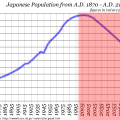
Japan has one of the oldest populations in the world – almost 28% are aged 65 or over while only 12% are under 15 years old – which puts pressure on public finances as well as labor supply and demand dynamics within its domestic market. As a result, there is less demand for goods and services which affects economic growth while there is also less tax revenue available for public spending which affects government finances. This aging population also reduces labor force participation which further reduces potential economic growth as fewer workers mean lower output levels per worker hour worked (productivity).
5. The Impact of Structural Reforms on Japan’s Economy
Structural reforms have been slow to take hold in Japan due to strong vested interests within certain sectors that are resistant to change such as agriculture and construction industries as well as strong opposition from labor unions who fear job losses if reforms are implemented too quickly or without sufficient protection measures for workers affected by them. As a result, progress towards achieving structural reforms has been slow which means that potential gains from these reforms have yet to be realized by Japanese citizens or businesses operating within its domestic market or abroad via exports or foreign direct investment (FDI).
6.The Impact of Low Productivity Growth on Japan’s Economy
Low productivity growth has been one factor contributing towards weak economic performance in recent years with output per worker hour worked remaining stagnant since 2000 despite increased investment into research & development (R&D) activities by both private firms & government agencies alike over this period.This stagnation can be attributed partly due to insufficient competition within certain sectors resulting in inefficient use & allocation resources,lack technological innovation & limited access new markets outside japan.Furthermore,low wages continue act disincentive businesses hiring additional staff instead investing technology & automation improve efficiency.
7.The Impact of Currency Exchange Rates on Japan’s Economy
Currency exchange rates have played an important role influencing japan’s export competitiveness recent years.Appreciation yen against other major currencies such US dollar euro made japanese products expensive overseas markets reducing demand them,thus impacting export performances & overall economic performance.Furthermore,currency appreciation caused import prices fall making imported goods cheaper than domestically produced goods reducing incentives producers innovate & remain competitive.
No products found.
8.Conclusion: What Can Be Done To Strengthen Japan’s Economy?
In order strengthen japan’s economy going forward,policymakers need focus implementing structural reforms boost productivity,encouraging businesses invest new technologies & increase competition within domestic market.They should also consider measures stimulate private consumption such tax cuts targeted at lower income households reduce inequality encourage consumer spending.Moreover,currency exchange rate policies need adjusted ensure yen remains competitively priced international markets order sustain export levels support future economic growth.
9 Expert Opinion from Charles R Tokoyama CEO Of Japan Insiders
.
According Charles R Tokoyama CEO Of Japan Insiders “It clear that japanese government needs take action address underlying issues affecting economy if they want see meaningful improvement terms both short-term macroeconomic performance long-term sustainable growth ” He adds “Structural reforms need implemented ensure efficient use resources encourage innovation increase competition all these measures would help boost productivity create jobs stimulate private consumption ultimately lead stronger healthier japanese economy ”
What is Japan’s main economic problem?
As the new year begins Japan faces cyclical and structural challenges. Its cyclical challenges are global supply chain disruptions and labor market frictions that continue to weigh on its economy as it tries to emerge from the global recession.
Is Japan having economic problems?
The Bank of Japan downgraded its economic outlook after Finance Minister Shunichi Suzuki warned that the countrys finances were deteriorating as the US and Japan grappled with debt problems.
Is Japan’s economy better than the US?
Japans economic growth has lagged behind that of the United States when measured by real gross domestic product (GDP) growth without accounting for population changes.
What is the biggest problem in Japan right now?
Everyone knows that Japan is in danger. The biggest problem it faces—a stagnant economy an aging society a declining birth rate a radiation of unpopular and seemingly ineffective governments—is a tremendous challenge and perhaps an existential threat.
Aging means slower labor force growth. Aging and declining fertility also reduced household savings that supported economic expansion during periods of rapid economic growth. Globalization and rapid aging pose a major challenge to the Japanese economy.
Why is Japan’s unemployment rate so low?
The Japanese government is taking effective measures to create employment opportunities for its citizens. The government provides subsidies to employers. Pay partial compensation to employees who take grudges so that companies dont have to lay off them.