
1. Introduction:
Japan has the highest national debt in the world, with a debt-to-GDP ratio of over 250%. This is an astounding figure when compared to other developed countries, such as the United States and Germany, which have ratios of around 100%. So why does Japan have such a high national debt? In this article, we will explore the reasons behind Japan’s high national debt levels and their potential impact on the country’s economy.
2. The History of Japan’s National Debt
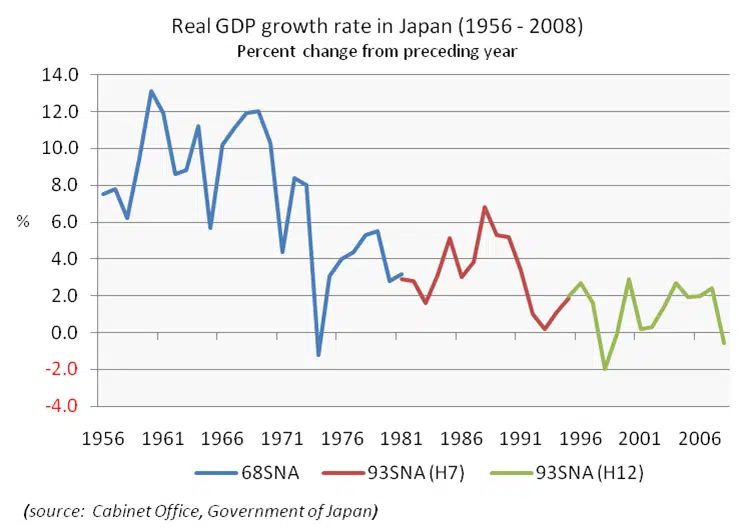
Japan’s high national debt can be traced back to its post-World War II economic boom. After the war ended, Japan experienced rapid economic growth and was able to rapidly reduce its public debt. However, this trend reversed in the 1990s when Japan’s economy entered a period of stagnation known as “the lost decade”. During this time, government spending increased significantly while tax revenues declined due to a weak economy. As a result, public debt began to rise again and has continued to do so ever since.
3. Japan’s Aging Population and Economic Slowdown
Japan has one of the oldest populations in the world with nearly 30% of its population over 65 years old. This aging population has put significant strain on the country’s social security system as well as its pension system. Additionally, Japan’s economy has been stagnant for more than two decades due to slow growth and deflationary pressures. This further decreased tax revenues while increasing government spending on social welfare programs such as health care and pensions for elderly citizens.
4. Low Interest Rates and Government Spending
In order to stimulate economic growth during this period of stagnation, Japanese authorities pursued an aggressive monetary policy that included keeping interest rates low for an extended period of time. This allowed businesses to access cheap credit which helped them grow but also encouraged government spending by making borrowing more affordable for them as well. As a result, government spending increased significantly while tax revenues remained low due to weak economic growth which further contributed to rising public debt levels in Japan.
No products found.
5. Low Tax Revenue and High Social Security Costs
The Japanese government relies heavily on taxes from corporations as well as individuals for revenue but due to weak economic growth these sources have been unable to keep up with rising social security costs associated with an aging population such as pensions and health care expenses for elderly citizens.This has resulted in increased borrowing by the government in order to make up for this shortfall in revenue which has further contributed to rising public debt levels in the country.
6. Japan’s Rising National Debt Levels
Due to all these factors combined,Japan now has one of the highest levels of public debt among developed countries,with a current ratio of over 250%.This is far higher than other developed nations such as Germany (around 100%) or even Greece (around 180%).
7. The Impact of Japan’s High National Debt Levels
The impact that high levels of public debt can have on an economy is significant.It can lead to lower investment,slower economic growth,higher inflation,weaker currency,higher interest rates,reduced ability for governments to respond effectively during times of crisis or recession,and ultimately greater risk for investors.For example,if investors become concerned about whether or not they will be paid back then they may be less willing invest their money into Japanese bonds leading to higher borrowing costs for the Japanese government.
8 Conclusion:
In conclusion,it is clear that there are multiple factors contributing towards why Japan currently holds some of highest levels of national debt among developed nations.These include its aging population,weak economic growth leading lower tax revenues,aggressive monetary policy leading increased borrowing costs,and higher social security costs associated with an aging population.All these factors combined have resulted in skyrocketing public debt levels which could potentially weigh heavily on future generations if left unchecked.
9 References :
1) https://www3.weforum.org/docs/WEF_GCR_NationalDebt_Report_2020_Revised1bw_06052020(1).pdf
2) https://www3cbsnewscom/cbsnews/news/japans-debt-problem-explained/.
3) https://wwweconomistcom/finance-and-economics/2018/06/30/japanese-debt-is-not-as-scary -as -it -seems
🇯🇵 Japan lovers, don’t miss these essential picks for learning and travel!
No products found.
1) https://www3.weforum.org/docs/WEF_GCR_NationalDebt_Report_2020_Revised1bw_06052020(1).pdf
2) https://www3cbsnewscom/cbsnews/news/japans-debt-problem-explained/.
3) https://wwweconomistcom/finance-and-economics/2018/06/30/japanese-debt-is-not-as-scary -as -it -seems
No products found.
Is Japan high debt a problem?
Japans public debt is more than twice its annual economic output making it the worlds largest engineering burden. Finance Minister Shunichi Suzuki reiterated the governments aim to achieve an annual budget surplus for the fiscal year ending March 23 2026 – excluding new sales and service obligations. January 2023
What is the debt issue in Japan?
TOKYO (Reuters) – Japans government debt is expected to exceed ¥1100 trillion ($8.47 trillion) for the first time at the end of March 2027 according to draft estimates obtained by Reuters.
Who has more debt US or Japan?
Japan. Japan has the highest percentage of national debt in the world at 259.43 percent of its annual GDP.
Which country has highest debt?
Japan – Debt: 221.32 percent of GDP Japans debt-to-GDP ratio is the highest in the world due to a prolonged period of economic stagnation and demographic challenges.days ago
Why did Japan’s economy crash?
The Japanese economy experienced a massive asset price bubble in the late 1980s. The bubble was caused by excessive credit growth allocations given to banks by the Bank of Japan through a policy mechanism known as the Bank of Japan Window Guidance.
How much Japanese debt does China own?
What has not changed over the past 10 years is Chinas purchase of JGBs. The balance of holdings was about 24 trillion yen ($175 billion) at the end of last year, up by percent from a year earlier.
