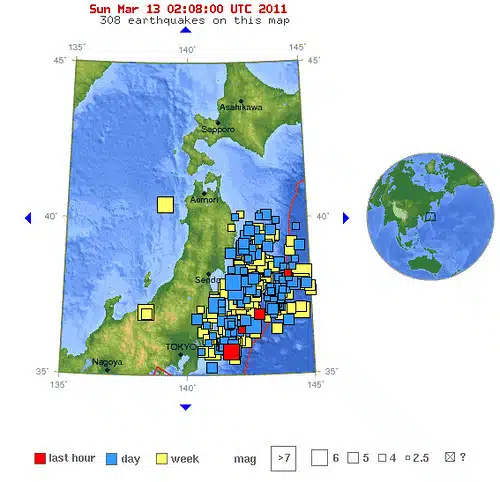
Should I be worried about earthquakes in Japan?

Should I be worried about earthquakes in Japan?

This article discusses the likelihood of earthquakes in Japan, their history, and the measures taken to prepare for them. Japan is located on the Pacific Ring of Fire, an area known for frequent seismic activity. The country has a long history of destructive earthquakes, including the 2011 earthquake and tsunami that left over 15,000 people dead or missing. However, Japan has developed extensive preparedness measures to minimize damage and loss of life, including strict building codes and advanced warning systems. Individuals can also take steps to prepare themselves for emergencies. Despite the risk of earthquakes, Japan is continually improving its preparedness measures through research and new technologies for early warning systems.
How many tsunamis happen a year in Japan?

How many tsunamis happen a year in Japan?

Japan experiences an average of three tsunamis per year due to its location on the Pacific Ring of Fire, which is prone to earthquakes and volcanic activity. The country has a long history of devastating tsunamis, including the Great East Japan Earthquake and Tsunami in 2011 that killed over 15,000 people. Japan has developed one of the most advanced tsunami warning systems in the world using seismographs and water level sensors to detect earthquakes and tsunamis. The government has also implemented measures such as building seawalls, zoning regulations, and evacuation plans to prevent or mitigate damage caused by tsunamis.
How many people are still missing from the Japan tsunami?

How many people are still missing from the Japan tsunami?

Ten years after the earthquake and tsunami that hit Japan in 2011, the search for missing individuals is ongoing. The destruction caused by the disaster resulted in the loss of many lives, and various organizations are still working tirelessly to find those who are still unaccounted for. The search involves various challenges, including difficult-to-access areas and decomposed remains. Technology and volunteers have played a significant role in the search, while counseling services are available to support families dealing with emotional impact. Closure is essential for families, emphasizing the importance of preparedness in the face of natural disasters.
Do Japanese hot springs allow tattoos?

Do Japanese hot springs allow tattoos?

Tattoos are still stigmatized in Japan and many businesses, including hot springs and gyms, prohibit customers with visible tattoos from entering their facilities due to their association with gang culture. However, some Japanese hot springs have relaxed their policies in recent years and now allow customers with small, discreet tattoos to enter their facilities as long as they cover them up with bandages or stickers. It's important for visitors to do their research and be respectful of the establishment's rules when visiting a Japanese hot spring.
What is underneath Japan?

What is underneath Japan?

Japan's geological history includes volcanic activity, earthquakes, and tsunamis that have shaped its landscape and culture. The country sits on the Pacific Ring of Fire, with four major tectonic plates converging under it. Japan has over 100 active volcanoes, including Mount Fuji, and several submarine volcanoes. Hot springs or onsen are also prevalent due to geothermal activity. Japan experiences thousands of earthquakes every year, with strict building codes in place to ensure safety. The Great East Japan Earthquake in 2011 was a devastating earthquake that triggered a massive tsunami and nuclear disaster. Tsunamis are a constant threat to coastal areas in Japan.
Why do Japanese wear towels in hot springs?

Why do Japanese wear towels in hot springs?

The tradition of wearing towels in Japanese hot springs, known as "onsen," has been around for centuries and is deeply rooted in Japanese culture. This practice helps maintain hygiene, modesty, personal space, and respect for others while promoting relaxation. Wearing a towel also shows respect for Japanese culture and customs. It is an essential part of the overall onsen experience and is followed strictly by many visitors from around the world who are interested in learning about Japanese traditions.
How likely is a tsunami in Japan?

How likely is a tsunami in Japan?

Japan is highly vulnerable to tsunamis due to its location in the Pacific Ring of Fire and its history of devastating tsunamis. The likelihood of another tsunami hitting Japan is high, with a 20-30% chance of a magnitude 8 or higher earthquake occurring in the Nankai Trough within the next 30 years. While natural factors like earthquakes are the primary cause of tsunamis, human activity can also increase the risk of these disasters. Japan has one of the most advanced early warning systems for tsunamis in the world and has implemented numerous measures to prepare for these disasters, including evacuation drills, emergency shelters, and tsunami-resistant buildings. Public awareness campaigns are regularly conducted to educate residents about tsunami risks and how to stay safe.
Can foreigners go to hot springs in Japan?

Can foreigners go to hot springs in Japan?

Foreigners are allowed to visit Japanese hot springs, or "onsen," although some still enforce their own rules that may exclude foreigners. Before visiting, it's important to understand the customs and etiquette surrounding onsen culture, including bathing naked in separate baths for men and women. Japan has many different types of hot springs, and booking can be done online or through tour operators. Each onsen has its own set of rules and regulations that visitors must follow, such as no tattoos or piercings, no drinking alcohol in the onsen, and no loud talking or noise. Visitors should bring personal hygiene items like a towel, shampoo, and soap. It's essential to be respectful of Japanese culture and customs when visiting an onsen and to follow the rules and regulations of the specific onsen you are visiting.
Can you wear shorts in Japan?

Can you wear shorts in Japan?

It is generally acceptable to wear shorts in Japan, but cultural considerations should be taken into account. Shorts are not widely accepted in traditional settings such as religious sites, and business dress codes are generally more formal than in Western countries. Women should avoid wearing shorts that are too short or revealing in conservative settings. Lightweight pants, skirts, and dresses can also be comfortable and appropriate for the Japanese climate. It's important to pay attention to your surroundings and dress appropriately for the occasion while being respectful of local customs and culture.
What are 3 natural disasters Japan suffers from?

What are 3 natural disasters Japan suffers from?

Japan is vulnerable to natural disasters due to its location on the Pacific Ring of Fire. The country experiences frequent earthquakes, tsunamis, and volcanic eruptions. To mitigate the impact of these disasters, Japan has invested in prevention and preparedness measures such as strict building codes, protective structures along the coast, and a sophisticated early warning system. In addition, Japan's emergency services are well-equipped to respond quickly and effectively in times of crisis. Despite these efforts, recovery and reconstruction efforts are often necessary after a disaster. Other countries can learn valuable lessons from Japan's experience with natural disasters to better prepare for and mitigate their own vulnerabilities.