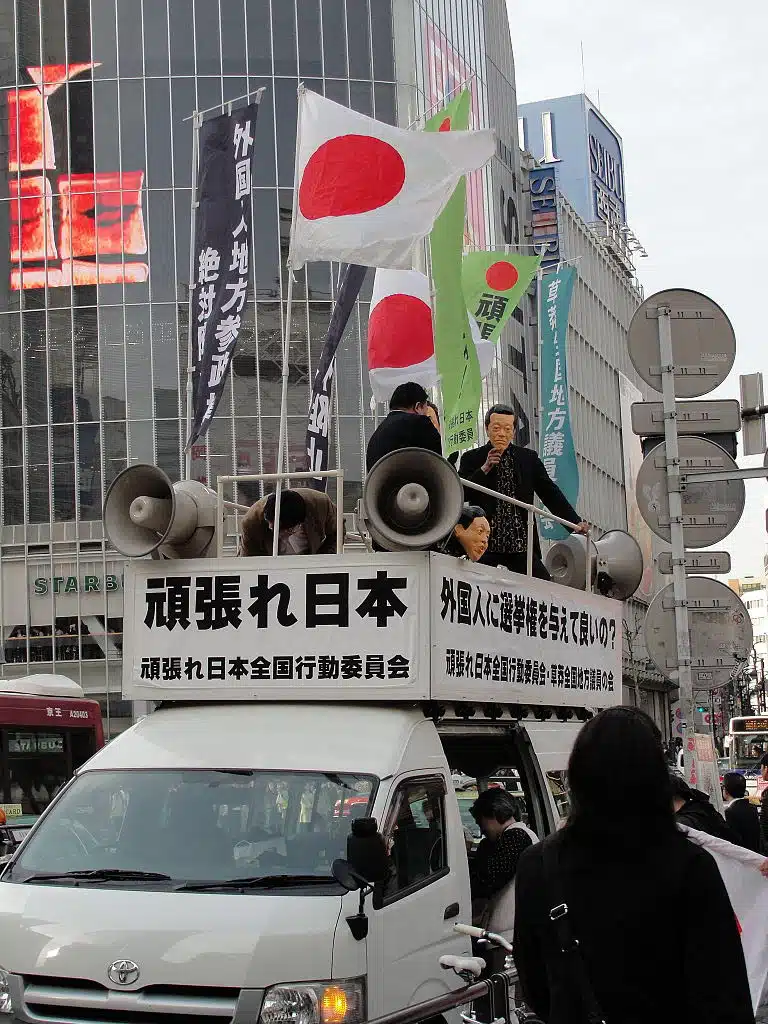
Do people in Japan have the right to protest?

Do people in Japan have the right to protest?

This article explores the legal, historical, and social aspects of protesting in Japan. It discusses the constitutional right to freedom of speech, thought and assembly as well as restrictions placed on protests such as not being allowed within 100m of embassies or near certain important buildings. The role of the media in reporting on protests is also discussed along with international human rights legislation that guarantees citizens' right to peaceful assembly. Pros and cons of protesting are also discussed, emphasizing the importance of peaceful protest to avoid legal repercussions.
What rights do Japanese citizens have?

What rights do Japanese citizens have?

This article provides an overview of the rights and protections granted to Japanese citizens by the Japanese Constitution. These rights include freedom of speech, the right to education, the right to vote and participate in politics, the right to work and social security benefits, the right to privacy and data protection, and the right to own property and inheritances. All of these rights are essential for ensuring that all people living within Japan have equal access opportunities while being protected against any potential abuse of power from government authorities or private entities.